Industrials
Updated
Edge + Cloud
Predictive maintenance running on factory-floor edge with cloud aggregation
Digital twin
Per-line digital twin for throughput optimisation and changeover
OEE +15-25%
Typical overall-equipment-effectiveness uplift, ColdAI internal benchmark, 2026
What does ColdAI do for Industrials?
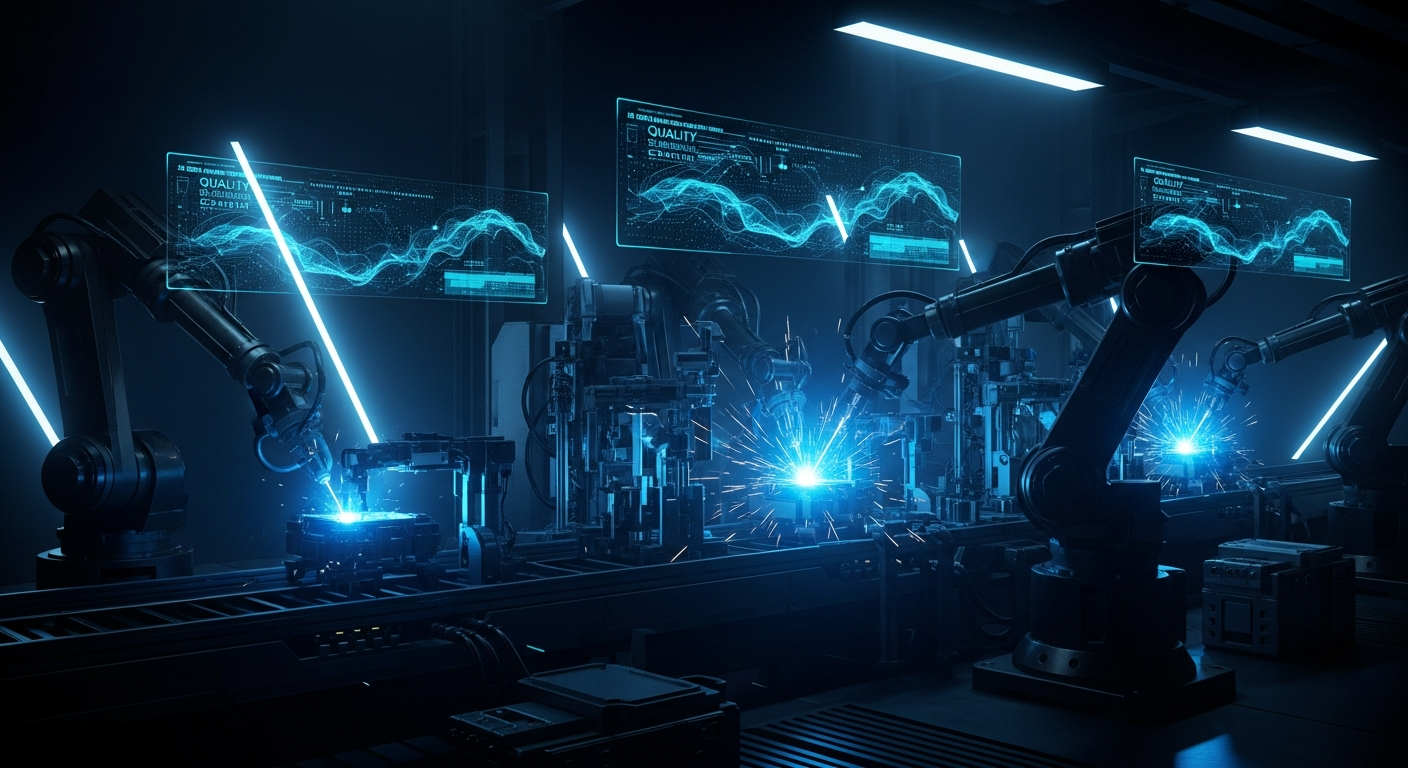
Implementing Industry 4.0 solutions including predictive maintenance, computer vision quality control, autonomous robotics coordination, and real-time supply chain visibility. Our industrial AI reduces unplanned downtime, minimizes defect rates, and optimizes production throughput through continuous machine learning on sensor data streams across manufacturing, warehousing, and distribution.
“Predictive maintenance only delivers OEE uplift when the action loop reaches the maintenance team in minutes. Edge inference is what makes that loop close.”
Industry 4.0 — From Concept to Production Floor
The industrial sector is being transformed by the convergence of AI, robotics, IoT sensors, and digital twins. The factories and facilities that win are those that can predict machine failures before they happen, detect quality defects in real-time, and reconfigure production lines autonomously in response to demand shifts. ColdAI delivers the full Industry 4.0 stack — from sensor integration and edge computing to enterprise-wide production intelligence platforms.
Use Cases We Deliver
Computer Vision Quality Inspection
Camera arrays and ML models on production lines detecting surface defects, dimensional variations, and assembly errors at speeds impossible for human inspectors.
Predictive Maintenance
Vibration, thermal, acoustic, and electrical sensors feeding ML models that detect early-stage equipment degradation and schedule maintenance in optimal windows.
Digital Twin Factories
Virtual replicas of entire facilities for simulating layout changes, new product introductions, and process modifications before touching the physical floor.
Supply Chain Visibility
End-to-end supply chain tracking from raw materials through finished goods distribution with AI demand forecasting incorporating seasonality and economic indicators.
Autonomous Robotics Coordination
Multi-robot orchestration for material handling, palletizing, and assembly tasks with dynamic path planning and workload sharing.
OEE Optimization Platform
Overall Equipment Effectiveness tracking with AI-driven root cause analysis automatically identifying drivers of availability, performance, and quality losses.
How We Help Across Industrial Sectors
| Segment | Challenge | ColdAI Solution |
|---|---|---|
| Discrete Manufacturing | Quality and throughput optimization | Vision inspection, predictive maintenance, OEE optimization |
| Process Manufacturing | Yield and energy efficiency | Process optimization, energy management, recipe tuning |
| Warehouse & Distribution | Labor efficiency and accuracy | Robotic automation, inventory optimization, pick path planning |
| Heavy Equipment | Asset utilization and maintenance | Telematics analytics, predictive maintenance, fleet management |
Our Industry 4.0 Delivery Process
Factory Assessment
Audit existing manufacturing equipment, control systems, and data infrastructure to identify the highest-value AI deployment opportunities.
Sensor & Edge Infrastructure
Deploy sensors, edge computing hardware, and data pipelines that capture the high-frequency data needed for AI-driven optimization.
Pilot Line Deployment
Deploy AI solutions on selected production lines with parallel monitoring to validate quality, maintenance, and efficiency improvements.
Plant-Wide Rollout
Expand successful pilots across the facility with operator training, MES integration, and centralized monitoring dashboards.
Why Industrial Companies Choose ColdAI
- Edge AI solutions that operate on the factory floor with millisecond latency, even without cloud connectivity.
- Computer vision systems trained on industrial imaging data — metals, plastics, textiles, electronics, and composite materials.
- Digital twin platforms that integrate with existing MES, ERP, and SCADA systems without requiring full infrastructure replacement.
- Measurable ROI: predictive maintenance alone typically reduces unplanned downtime by 30-50%.
Frequently Asked Questions
What does ColdAI do for the Industrials industry?
Implementing Industry 4.0 solutions including predictive maintenance, computer vision quality control, autonomous robotics coordination, and real-time supply chain visibility. Our industrial AI reduces unplanned downtime, minimizes defect rates, and optimizes production throughput through continuous machine learning on sensor data streams across manufacturing, warehousing, and distribution.
Which Industrials use cases does ColdAI support?
ColdAI delivers AI systems, distributed-ledger infrastructure, and managed services tailored to Industrials workflows. Engagements range from advisory and architecture review through full custom build, deployment, and ongoing managed operation.
How does ColdAI engage with Industrials clients?
ColdAI engages with Industrials organisations through four service lines: strategic AI consulting, frontier R&D, custom development, and managed services. Most engagements begin with a focused discovery sprint that produces an architecture and roadmap before any build work starts.
Where can I see ColdAI's broader work across industries?
ColdAI deploys strategic intelligence and distributed-ledger infrastructure across 27 industries — from aerospace and defense to financial services, healthcare, and energy. Browse the full list at https://coldai.org/industries/ or explore related insights at https://coldai.org/publications/insights/.
Latest analysis from this industry
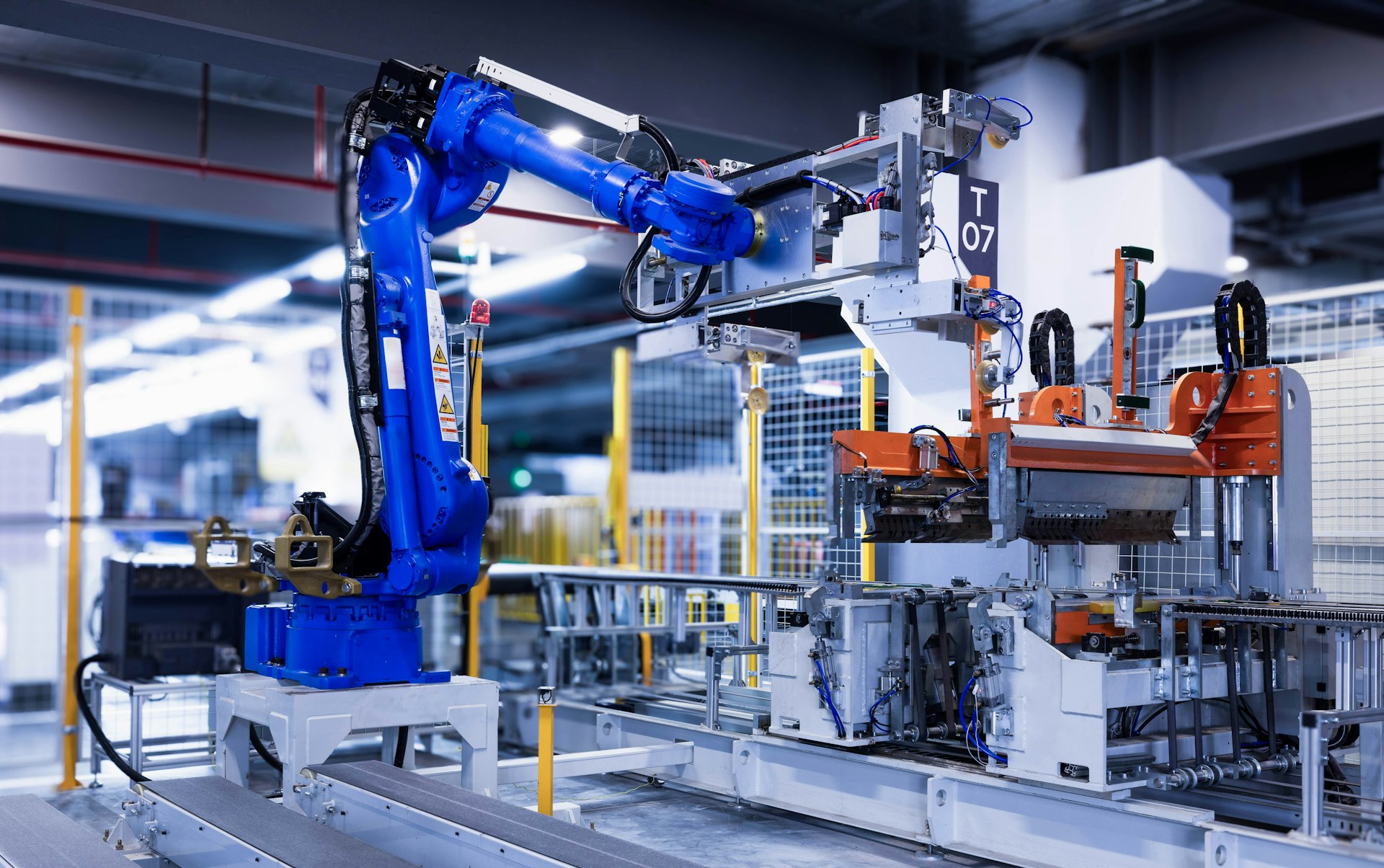
How Discrete Manufacturers Are Tokenizing Machine Uptime Instead of Tracking It
Leading industrials are embedding distributed ledgers into production lines to create tradeable uptime guarantees, fundamentally restructuring OEM service contracts and working capital.
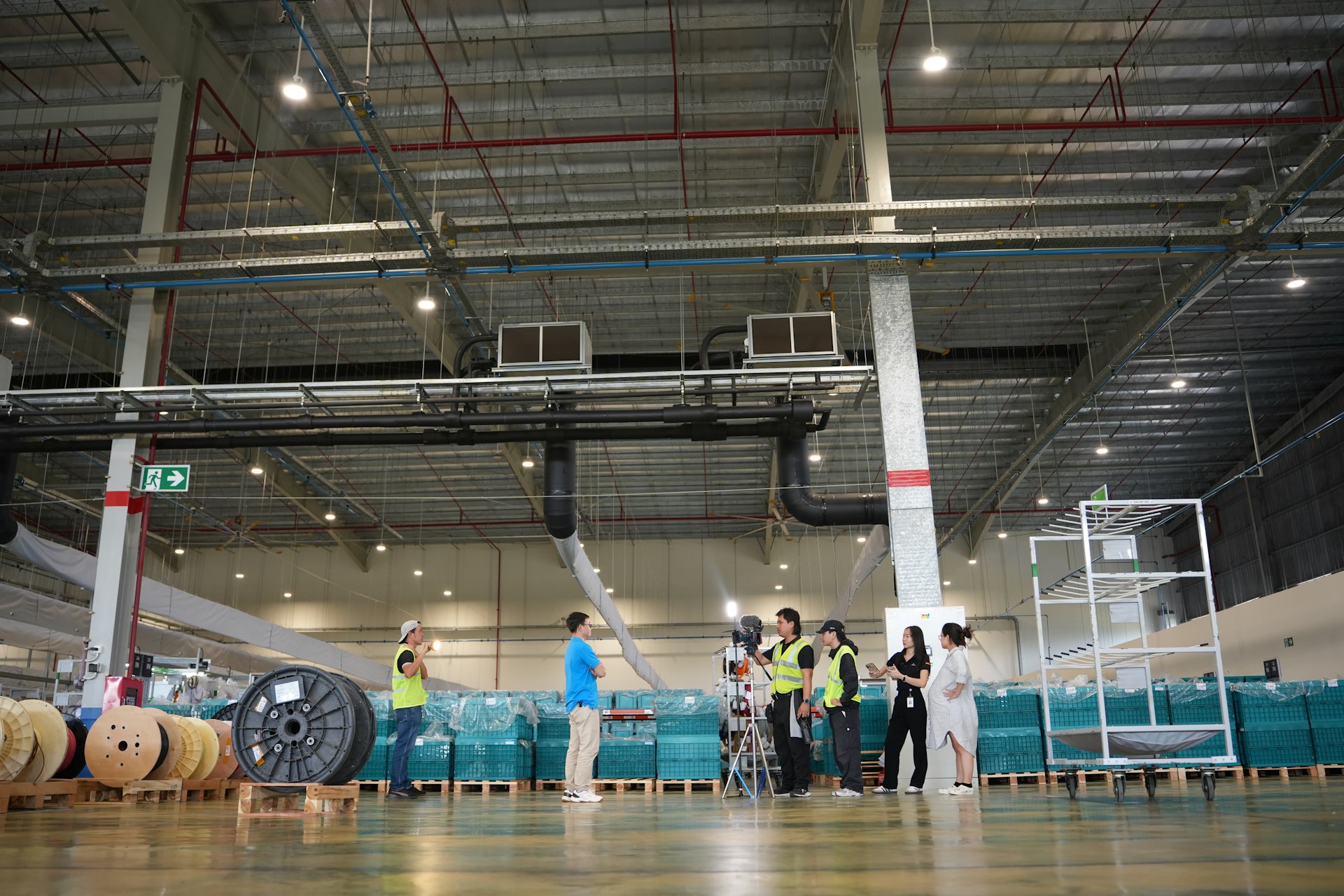
Behind the shift: The Best Industrials Plants Now Run Two Parallel Ledgers
Distributed manufacturing networks are deploying dual-ledger architectures to separate physical operations from financial settlement, unlocking real-time margin visibility.